

When to Choose SILK over Other Laser Procedures: The Key Indicators
- Plan My Lasik

- Oct 31, 2025
- 3 min read

The field of laser vision correction has rapidly advanced over the years - LASIK, SMILE, and the newer SILK technique are all procedures that allow patients to have visual clarity without the need for glasses. Each has merits; however, it makes sense to consider when SILK is the preferred method. Knowing the identifiers for SILK eye surgery will leave prospective patients informed and confident in making a decision.
What is SILK?
SILK (Smooth Incision Lenticule Keratomileusis) is a cutting-edge laser vision correction technique that affords precision, safety, and improved recovery speed. Conversely, SILK utilizes smoother incision edges to create a lenticule (the thin layer of corneal tissue), and ultimately provides better visual clarity and less discomfort during recovery. SILK is therefore proving to be one of the more promising technologies the world of modern refractive surgery is seeing.
Identification of Key Indicators that SILK may be Right for You
1. Thin / Irregular Corneas
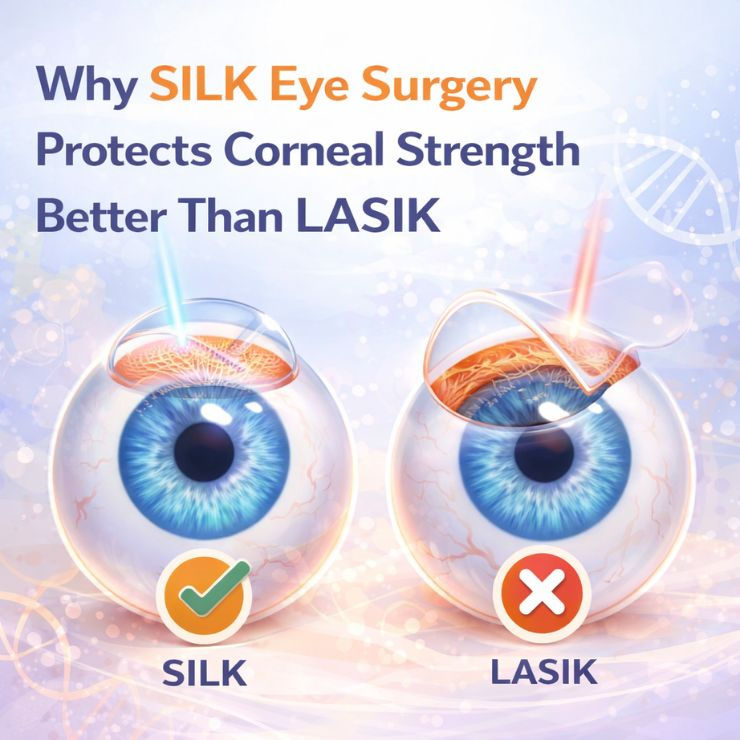
Focusing on corneal thickness is one of the limitations of LASIK surgery. Consequently, patients may not have enough corneal thickness even to be considered for LASIK, and have corneas that are shaped in a way that would disallow them to be eligible for LASIK. SILK, however, involves smaller and smoother incisions, making it more optimal for these conditions.
2. Lifestyle and Occupational Needs
Options to consider SILK are for people who have lifestyles or occupations that have a high risk factor for eye injury, such as athletes, military personnel, and construction workers. The smooth incision profile can immediately reduce flap-related complications and improve corneal biomechanical stability in more demanding lifestyles.
3. Rapid Recovery with Little Discomfort
If you are looking for a procedure that has a rapid recovery profile or at least want to limit your post-operative discomfort, then SILK can be the option for you. Most patients report that discomfort after their SILK is significantly less than some other traditional procedures and experience less post-operative dryness as well as improved sharpness of one's vision immediately after surgery. For individuals planning their schedule around a busy agenda, this speedy healing is a fantastic benefit.
4. Precision and Safety
SILK uses the latest laser technology to create lenticules to an exceptional degree of accuracy. This decreases the likelihood of vision distortions, such as night halos or glare, commonly found with previously available lenticule production techniques. If you are in search of a procedure that will provide increased long-term safety and success of vision stability, please consider SILK.
5. Stronger Corneal Biomechanics
Due to SILK cutting small and less invasive diameter incisions, the integrity of the cornea is preserved. This is important for those who are concerned about the health of their eyes over time or those who may be at risk for corneal weakness.
6. Less Post-Surgery Dryness
Post-operative dry eyes are a common phenomenon for many laser eye procedures. SILK's minimally invasive technique means fewer nerves are interrupted in the cornea, which greatly reduces the incidence of chronic dryness. This is an important aspect for anyone who has dry eye syndrome.
SILK Compared to Other Procedures
Although LASIK remains a popular option because it has been offered the longest, it may not be the best option for everyone. SMILE has its advantages as well, in that it is flap-free surgery, but it does have significant issues with the smoothness of the incision. Fortunately, SILK is the newest iteration and has the advantages of the other procedures with fewer disadvantages.
Keep in mind that surgeries like this should always be discussed in the context of an eye surgeon visit. Corneal thickness, lifestyle, prescription level, and the long-term health of your eyes must all be considered before proceeding.
Conclusion
The difference between options could make or break your ability to have sharp, stable, and comfortable eyesight. SILK has unique advantages over other procedures with regard to precision, safety, and ability to recover, which makes it a great option for lots of patients—especially patients with thinner corneas, very active lifestyles, and or concerns about dry eye. If you are looking at laser eye surgery in Delhi, get in touch with Plan My LASIK and participate in a merits discussion with a competent ophthalmologist before deciding what is best for your eyes.


Comments