

SMILE Surgery for High Cylinder Power: Is It the Right Choice?
- Plan My Lasik

- Jan 28
- 4 min read

Astigmatism is a general refractive error, which is caused due to a non-regularly shaped cornea, and causes blurred or distorted vision both in near and distant vision. Patients who have high cylinder power can have such disturbances that significantly influence everyday life, making reading, working on screens, or even driving at night uncomfortable and frustrating. As the technology of refracting improved, surgical solutions have changed beyond glasses and contact lenses. Among the modern choices that are becoming increasingly popular is the SMILE surgery, such as SMILE laser eye surgery in Delhi, which is being considered as a long-term corrective vision surgery.
This blog approaches closer to discuss whether SMILE surgery is a good choice to offer to individuals with high astigmatism and clarify advantages, disadvantages, and what clinical issues are critical.
Understanding SMILE Surgery
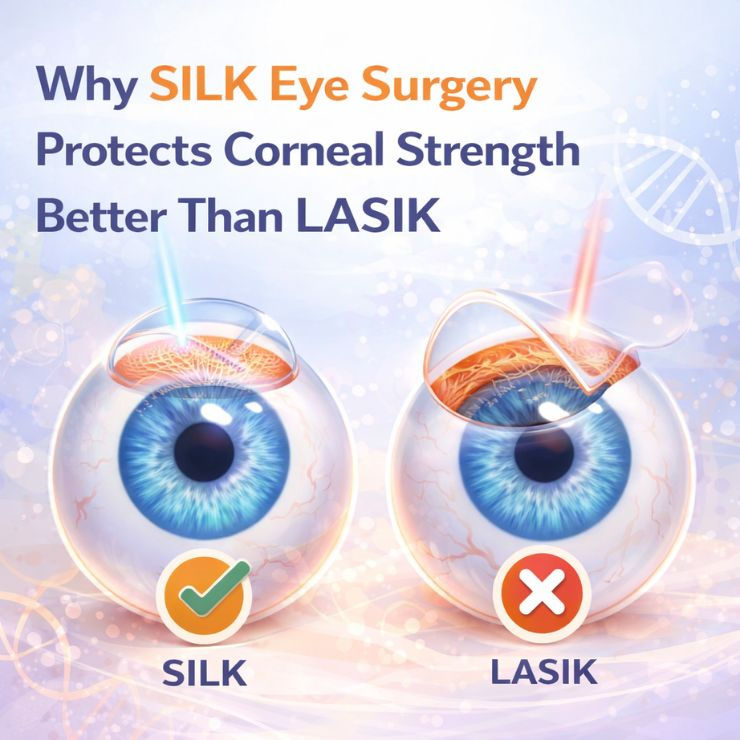
Small Incision Lenticule Extraction or SMILE is an advanced laser vision correction form. SMILE does not require the creation of a large corneal flap as opposed to traditional LASIK. Rather, a femtosecond laser forms a tissue (called a lenticule) which is a small, lens-shaped tissue within the cornea. This lenticule is taken out by making a small incision, which normally measures 2-4 mm.
Since SMILE is a minimally invasive and flap-less surgery, it is accompanied by a number of benefits:
Less post-surgical pain
Reduced the chances of dry eye signs
Quick healing and recovery of sight
The strength of the corneas was preserved better
The latter characteristics make SMILE especially attractive to patients whose lifestyles are active or who are worried about the long-term stability of the cornea.
What Is High Cylinder Power and How Does It Affect Vision?
The correction of astigmatism is known as cylinder power. Astigmatism exceeding 2.00 diopters would be considered high, whereas that exceeding 3.00 diopters would be considered very high.
High cylinder power causes light entering the eye to focus at multiple points instead of a single sharp focus on the retina. This leads to symptoms such as:
Constant blurred vision or shadowed vision
Eye strain and headaches
Poor reading between the lines
Blinding or halos, or blurred vision at night
Unstable clarity during the day
Reduced depth perception
High astigmatism can reduce your quality of life and even result in problems related to visual development in younger people.
Is High Cylinder Power Correctable by SMILE?
The SMILE procedure has been used in the treatment of myopia and mild to high astigmatism. SMILE can now actually correct cylindrical power of about 5.00 diopters with modern laser platforms and improved preoperative diagnostics. This has expanded its use for patients considering SMILE laser eye surgery in Delhi as an alternative to traditional procedures.
But the success is determined by the following key factors:
Corneal thickness: Adequate corneal tissue must remain after correction to ensure long-term stability.
Corneal consistency: The consistency of the shape of the cornea is mandatory in correcting astigmatism.
Proper eye tracking: Modern technologies ensure the accuracy of the process.
General eye health: Dry eye disease, Keratoconus or any prior eye surgery could influence the eligibility.
The pre-surgical assessment, corneal topography with thickness mapping, and ocular surface evaluation are important details that should be examined before recommending SMILE.
When Is SMILE Not the Best Solution
Even though SMILE works well with most patients, it does not apply to all patients with high cylinder power. It is not necessarily the best in the circumstances such as:
If your astigmatism is above the ideal treatable range. (about 5.00 diopters)
Very irregular or scarred eyes.
Mixed astigmatism (mixture of Hyperopic and myopic components)
Progressive refractive errors are particularly common among younger patients.
Advantages and Disadvantages of SMILE with High Astigmatism.
Advantages
Minimal invasive: No flap incision is used in order to conserve the corneal bio mechanics.
Rapid recovery: Visual functionality usually returns in 1-2 days.
Painless procedure: Not long, but painless.
Appropriate among active participants: Reduced risk of complications.
Limitations
Correction range: Astigmatism may be extremely high or irregular, which may be beyond the capabilities of SMILE.
Expertise in surgery: The results are very sensitive to work experience and accurate planning.
Combined Approaches for Complex Cylinder Power
Combinations of SMILE and some other methods can enhance their performance in some situations:
SMILE then surface improvement: Assists in polishing the remaining astigmatism.
Laser enhancement directed by topography: Applicable to uneven corneal patterns.
Early enhancement planning: This is to allow correction in time, in case of residual power that is minor.
These methods presuppose the use of the latest diagnostics, individual treatment, and high surgical quality.
Conclusion
SMILE surgery can be considered a significant development in laser vision correction and is an efficient remedy to patients whose cylinder power is moderate to high. It is an effective treatment because of its flap-less design, quicker recovery, and better level of comfort. But very high or irregular astigmatism can make patients rely on alternative or combined correction measures that can be used to the best effect.
If you are planning to undergo a SMILE laser eye surgery in Delhi, then a thorough eye check-up and professional counseling must be conducted to assess whether SMILE is the suitable route to meet your sight requirements. Our surgeons at Plan My LASIK will evaluate your candidacy, and let you know whether SMILE is an ideal treatment for you or not. SMILE can be a life changing process with the right evaluation and expectations towards glasses-free vision.


Comments